
Black Barbers of Austin
Ideal Barbershop & a Living Legacy
For generations, Black barbershops have been far more than places to get a haircut. They have served as centers of entrepreneurship, trusted community spaces, and informal civic institutions—particularly during segregation, when Black ownership and economic independence were acts of resistance in themselves.
The Black Barbers of Austin Project, curated by Black Austin Tours, centers this often-overlooked history through one of its most enduring institutions: Ideal Barbershop, located at 1914B East 12th Street. Still operating today, Ideal Barbershop stands as a living link between Austin’s past and present, anchoring stories of labor, family, community leadership, and place.
 |  |  |  |
|---|
Ideal Barbershop: A Family Legacy on East 12th Street
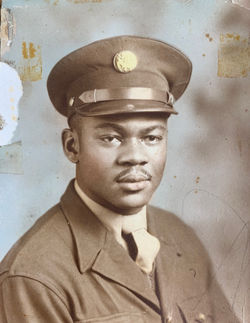
Following World War II, Leonard F. Hill, a Black veteran and grandson of formerly enslaved Africans, pursued barbering as a pathway to stability and ownership. Using his postwar earnings, Hill enrolled at Tyler Barber College in Tyler, Texas—the first barber college for Black Americans in the United States, founded in 1933 by Henry M. Morgan.
Morgan’s school was revolutionary. During the Jim Crow era, state regulations and licensing systems were structured to exclude Black people from skilled professions. Tyler Barber College created a formal, legal pathway into barbering at a time when such access was otherwise denied. Through Morgan’s schools, thousands of Black barbers across the country gained the credentials necessary to practice, build businesses, and serve their communities.
After completing his training, Leonard Hill returned to Austin and, in 1948, opened Ideal Barbershop in the heart of East Austin’s historically Black business district. The shop was not built by Leonard Hill alone. His wife, Rosa Crenshaw Hill, played a critical role in its founding, contributing funds from her inheritance to help finance the business.
When Ideal Barbershop opened, Leonard and Rosa Hill were living in Rosewood Courts, the first federally funded public housing project for Black residents in the United States. Their story reflects a generation of Black Austinites who leveraged military service, education, family resources, and determination to create lasting institutions under conditions shaped by segregation.
More than seventy-five years later, Ideal Barbershop remains in continuous operation and under family stewardship. It functions today as both a working barbershop and a site of living history—where stories are still exchanged chair by chair.

The Ideal Barbershop Mural
Artwork by Ryan Runcie
Painted by Austin-based artist Ryan Runcie, the mural at Ideal Barbershop transforms the building into a public-facing site of history and community memory. While the mural centers Leonard F. Hill and the legacy of Ideal Barbershop, it also tells a broader East Austin story—honoring the people, businesses, and everyday lives that shaped the neighborhood for generations.
The artwork reflects East Austin as it was built and sustained by Black residents, while also acknowledging the profound changes the area has undergone. As gentrification has reshaped the neighborhood and displaced many long-standing Black residents and businesses, Ideal Barbershop now stands as one of the few remaining Black-owned businesses in the area. The mural situates the shop within this history of loss, survival, and continuity.
In this way, the mural functions as more than a tribute to a single business. It is a visual narrative about place—about community, memory, and what remains. A QR code installed at the mural links directly to the Built to Last oral history videos, inviting visitors and passersby to hear from those whose lives and labor shaped East Austin.
Together, the mural and the oral histories operate as both artwork and archive, bridging street-level experience with digital preservation and ensuring that East Austin’s Black history remains visible, accessible, and rooted in place.
Built to Last: Oral Histories from the Chair

As part of this project, Black Austin Tours produced Built to Last, a video oral history series capturing the lived experiences of Black barbers connected to Austin’s barbershop tradition.
These professionally recorded and edited interviews document stories of entrepreneurship, segregation, neighborhood change, and the enduring cultural importance of the barbershop. Select videos are embedded on this page, and the full series is available on YouTube.
Whether viewed online or accessed on-site, these oral histories ensure that Black barbers are not only remembered—but heard in their own voices.
A Living Project
The Black Barbers of Austin Project is an ongoing effort to honor Black barbers through storytelling, oral history, and place-based preservation.
This page represents a starting point—one that will continue to grow as more stories are documented and shared.
Ideal Barbershop remains open.
The chairs are still filled.
And the legacy is built to last.
Why Black Barbers Matter in Austin
Black barbers occupied a unique position within Austin’s Black community. As entrepreneurs whose clientele was overwhelmingly Black, barbers were often less vulnerable to economic retaliation from white institutions. This relative independence allowed barbershops to function as spaces where information circulated, political conversations unfolded, and collective responses to injustice were organized.
Barbershops were places of trust. They were where news traveled, strategies were discussed, and community bonds were reinforced. Understanding Austin’s Black history requires understanding its barbers, their shops, and the networks they sustained.
The Black Barbers of Austin Project exists to document, preserve, and share these histories—before they are lost.